How to Verify Engine Fitment
How to Verify Engine Fitment
Ordering the right replacement engine starts with more than matching a model number. Learn what repair shops should verify before ordering to avoid fitment problems, installation delays, and unnecessary costs.
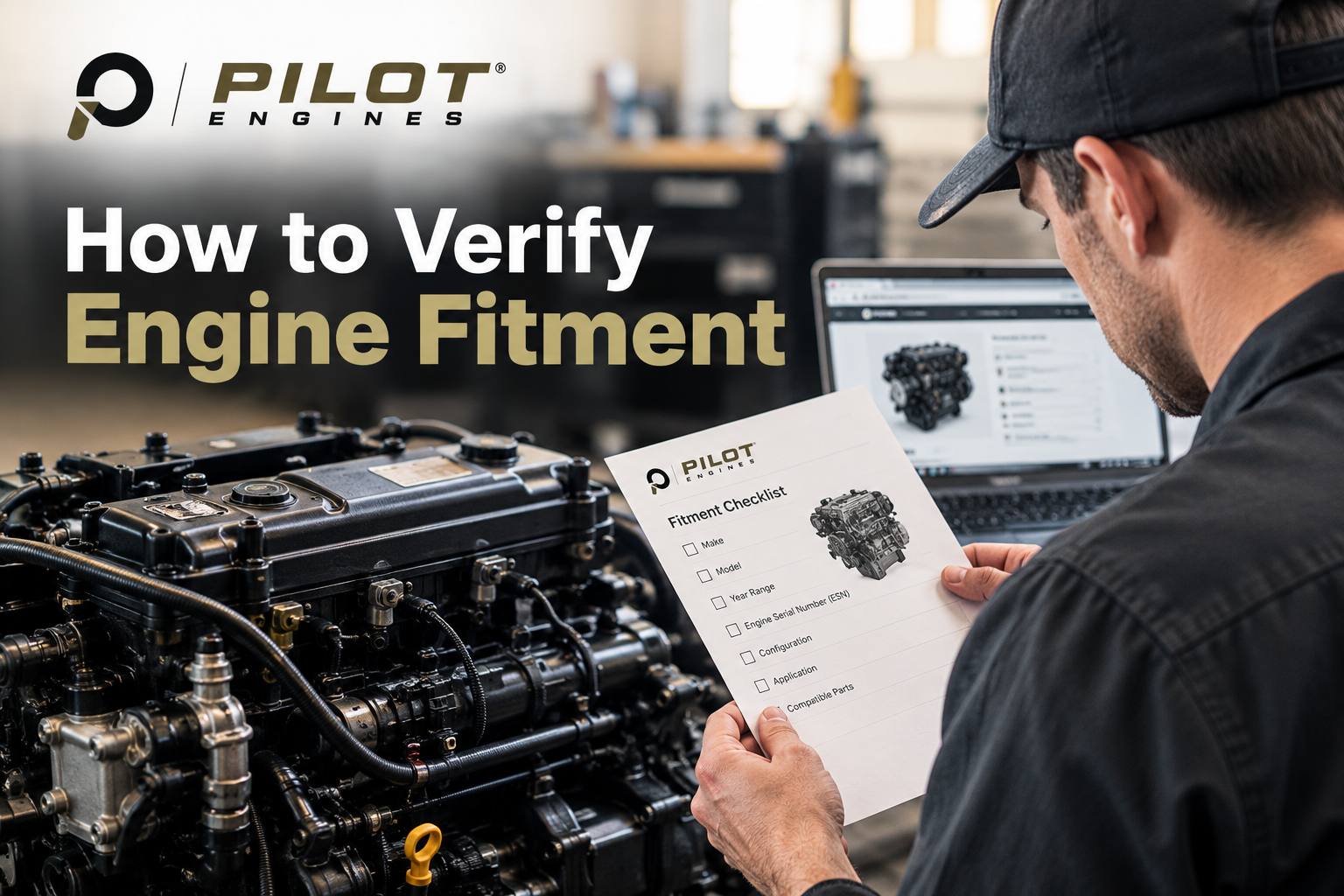
When a customer brings a failed engine into your shop, identifying the correct replacement is one of the most important steps in the repair. The engine model alone may not be enough. Different configurations can exist within the same engine family, so repair shops should verify the engine serial number, application, and configuration before ordering.
For many applications, the engine serial number is the key piece of information used to determine the correct replacement. Pilot Engines builds replacement engines to the exact engine serial number and can help confirm the correct engine before you order. (Pilot Engines)
Start With the Engine Serial Number
The engine serial number should be one of the first things you collect when quoting a replacement engine.
Why? Because the same basic engine model can be used in multiple applications with differences in configuration, horsepower, emissions equipment, accessories, or other components.
Pilot Engines specifically notes that OE and CPL numbers can be used as references, but the actual application is determined by the engine serial number. (Pilot Engines)
When requesting a quote, have the following information available whenever possible:
- Engine serial number
- Engine model
- Vehicle or equipment make and model
- Vehicle identification number (VIN), when applicable
- Application or type of equipment
- CPL, AR number, or other identifying numbers when applicable
- Any relevant configuration information
The more complete the information, the easier it is to confirm the correct replacement.
Don't Match by Engine Model Alone
An engine model is a starting point, not always the final answer.
For example, Pilot's Cummins product information shows multiple applications and configurations within the same engine family. Its 5.9L 6B product page lists several CPL numbers and applications while noting that the specific application is determined by the engine serial number. (Pilot Engines)
This is important when you're quoting a customer. Two engines that appear similar on paper may not be interchangeable without additional parts, modifications, or configuration changes.
Before you tell a customer that an engine is a direct replacement, verify the specific application.
Check the Application and Configuration
Once you have the serial number, confirm where the engine is being used.
For a repair shop, that means looking beyond the engine itself and understanding the equipment it powers. A replacement for an on-highway truck may have different requirements from an engine used in construction or industrial equipment.
Pay attention to:
- On-highway vs. off-highway application
- Equipment or vehicle model
- Model year
- Horsepower requirements
- Emissions configuration
- Injection system
- Turbocharger configuration
- Accessory and mounting configuration
- Long block vs. complete engine requirements
Pilot's product pages identify applications, configurations, model years, horsepower ranges, and other specifications to help determine the appropriate replacement. (Pilot Engines)
If there is any uncertainty, don't guess. Give the supplier the identifying information and have the application confirmed before placing the order.
Verify What You're Actually Quoting
Fitment is only part of the equation. You also need to make sure you're comparing the same type of replacement.
A long block and a complete drop-in engine can require very different levels of preparation and installation work. If you're quoting a customer based on one configuration and ordering another, the difference can create unexpected parts and labor requirements.
Before finalizing the quote, confirm:
- What configuration is being supplied?
- What components are included?
- Which original components will need to be transferred?
- Is the replacement intended to install without modification?
- What information is required for warranty registration?
Pilot's installation and warranty information states that its engines are built to the exact engine serial number to help eliminate additional parts and excessive labor at installation. (Pilot Engines)
That doesn't eliminate the need to follow the manufacturer's installation procedures, but confirming the configuration before ordering can help prevent avoidable surprises when the engine reaches your shop.
What to Send When Requesting a Quote
If you want the fastest path to an accurate quote, send the supplier the information you already have rather than starting with only the engine model.
A good quote request should include:
Engine serial number: The most important identification information for confirming the application.
Engine model: Helps establish the engine family and narrow the available configurations.
Vehicle or equipment information: Include the make, model, year, and application when available.
VIN: For applicable on-highway vehicles, the VIN can provide additional application information.
Additional identification numbers: Depending on the manufacturer, this could include a CPL, AR number, or other reference number.
Configuration details: Include horsepower, injection system, turbocharger, or other information when known.
Pilot's product bulletins similarly instruct customers to gather original machine and engine identification information before requesting price and availability. (Pilot Engines)
.
Confirm Before You Order
A replacement engine is too important to treat as a simple part-number lookup.
For a repair shop, the safest process is straightforward: identify the engine, verify the application, confirm the configuration, and then place the order.
If you're unsure whether you have identified the correct replacement, Pilot Engines can help verify the application using information such as the VIN, engine serial number, or application details. (Pilot Engines)
Frequently Asked Questions
Is the engine model enough to order a replacement?
Not always. The same engine model can be used across multiple applications and configurations. Pilot Engines recommends using the engine serial number to determine the specific application. Providing the serial number helps the supplier identify the correct replacement rather than relying only on a general engine model. (Pilot Engines)
What information should I have before requesting an engine quote?
Start with the engine serial number and model. Also provide the vehicle or equipment make and model, VIN when applicable, and any available CPL, AR, or configuration information. Having this information ready can make it easier to confirm fitment and prepare an accurate quote.
What if I'm not sure which engine I need?
Don't guess based on appearance or a general engine model. Provide the engine serial number, VIN, and application information to your engine supplier. Pilot Engines can use that information to help identify the appropriate replacement for your specific application. (Pilot Engines)
Need Help Confirming Engine Fitment?
Have the engine serial number and application information ready, then contact Pilot Engines for help identifying the right replacement engine for your customer. Pilot's team can help confirm the application and provide a quote before you order. (Pilot Engines)