7011163434 • October 21, 2026

How to Compare Engine Replacement Quotes

Date

October 21, 2026

Share

How to Compare Engine Replacement Quotes

When your engine fails, getting several quotes can help you find a replacement that fits your budget. But the lowest price does not always represent the best value. Differences in engine configuration, included components, warranty coverage, shipping, and installation requirements can affect what you ultimately pay.


The best way to compare engine replacement quotes is to make sure each supplier is quoting the same engine configuration and then evaluate the full cost of getting your equipment running again.


1. Make Sure You're Comparing the Same Engine


Before comparing prices, confirm that each supplier is quoting an engine that fits your specific vehicle or equipment.


The same engine family can have different configurations depending on the application. Differences may include horsepower, emissions equipment, accessories, mounting arrangements, and other specifications.


A quote for an engine that looks similar on paper might not be for the correct replacement.


Before requesting or comparing quotes, gather:


  • Your engine serial number (ESN), if available.
  • Your vehicle identification number (VIN), when applicable.
  • The equipment make, model, and year.
  • Any available information about the original engine's configuration.


Ask each supplier to confirm that the quoted engine matches your application. Do not rely on the engine name or displacement alone.


Pilot Engines matches replacement engines to the customer's specific engine serial number to help ensure the correct configuration. You can browse available engine manufacturers and models or contact the team to confirm which engine you need.


2. Understand What the Engine Price Includes


Not every engine quote describes the same product. One supplier might quote a long block, while another quotes a more complete drop-in engine.


A long block generally includes the engine's major internal components and assembled cylinder head, but the exact configuration varies. A drop-in engine typically includes more of the components needed for installation, although the precise contents depend on the engine.


Ask each supplier:


  • Is this a long block or a complete drop-in engine?
  • Which components are included?
  • Which original parts must be transferred from my old engine?
  • Are additional parts or modifications likely to be needed?
  • Is the quoted engine built to the specifications of my application?


A lower-priced engine may require additional parts or labor before installation. A more complete engine may cost more upfront but reduce the work required during the replacement.


The goal is not necessarily to buy the most complete engine available. It is to compare equivalent configurations and determine which option makes the most sense for your equipment and budget.

3. Compare the Total Cost, Not Just the Quote


The engine price is only one part of the replacement expense. To understand what you will actually spend, ask for a breakdown of the major costs involved.


Consider these items when comparing suppliers:

Cost What to confirm
Engine Exact configuration and included components
Freight Delivery charges and any return-shipping costs
Core charger Deposit requirements and conditions for reimbursement
Installation Labor estimate and any additional parts required
Fluids and supplies Oil, coolant, filters, and other required items
Additional repairs Potential issues discovered during installation

Some costs will come directly from the engine supplier, while others will come from the repair shop performing the installation.


For example, one supplier may include freight in its quote while another lists it separately. Comparing only the engine prices could make the second quote appear less expensive than it really is.


Pilot Engines states that round-trip freight is prepaid within the continental United States for its remanufactured engine orders. Confirm the terms for your particular order and compare the full delivered cost with other quotes.


Also ask whether the repair shop's estimate includes all anticipated labor and related p

4. Review the Warranty Before You Buy


Warranty coverage is an important part of the value you receive with a replacement engine. However, warranties can differ in duration, covered components, exclusions, and the process required to make a claim.


Before choosing a supplier, ask:


  • How long does the warranty last?
  • Does coverage differ between long block and drop-in configurations?
  • Are labor costs covered, and under what conditions?
  • What installation procedures must be followed?
  • Does the engine need to be registered to activate coverage?
  • What must I do if a problem develops?


Read the actual warranty terms rather than relying solely on a salesperson's summary. Pay particular attention to exclusions and requirements that could affect whether a future claim is covered.


Pilot Engines publishes its engine warranty information online. Review the terms and confirm the coverage that applies to the specific engine you are considering.

A lower quote may be less attractive if it comes with materially different warranty protection. At the same time, a higher price does not automatically mean better coverage. Compare the actual terms.


5. Understand the Core Charge and Return Process


When you purchase a remanufactured engine, the supplier may require you to return your old engine, known as the core. A core charge is an amount associated with the return of that old engine, and reimbursement may depend on its condition and the supplier's policies.


Before ordering, clarify:


  • Is a core charge included in the quote?
  • How much reimbursement could I receive?
  • What condition must the old engine be in?
  • Who arranges pickup and pays for return freight?
  • Is there a deadline for returning the core?


These details matter when calculating your actual cost. A quote with a lower initial price might involve a different core charge or return process.


Ask the supplier to explain the terms in advance so you can budget appropriately and understand what you need to do after the replacement is installed.

6. Compare Availability and Customer Support


Price matters, but so does getting the correct engine when you need it.


If your truck, tractor, or equipment is sitting idle, delays can affect your work and income. Ask each supplier about current availability, estimated shipping timing, and any information needed to confirm the order.


Be sure to distinguish between an engine that is available to ship and one that must be remanufactured before shipment. Request an estimate for your specific engine rather than relying on a general delivery promise.


You should also consider how easily you can get help if questions arise. Does the supplier help verify engine fitment? Can someone explain the quote? Is there a clear process for addressing warranty questions or other issues?


Responsive service can be especially valuable when you are making a substantial purchase and need answers before committing.


Pilot Engines offers customer support and engine quote assistance to help customers identify the right replacement and understand their options.


Should You Choose the Lowest Engine Quote?


Not necessarily. The right choice is the quote that offers the best overall value for your situation, based on the correct engine configuration, total cost, warranty protection, availability, and support.


Before making your decision, use this checklist:


  1. Each quote matches my engine serial number and application.
  2. I understand what components are included.
  3. I have accounted for freight, core charges, installation, and additional parts.
  4. I have reviewed the applicable warranty.
  5. I understand the estimated shipping timeline.
  6. I know whom to contact if I need help.


If one quote is less expensive than the others, ask the supplier to explain the difference. It may represent a genuine savings opportunity, or it may reflect differences in what is included.


Comparing the details helps you make that distinction before spending your money.


Frequently Asked Questions

  • Should I get multiple quotes for a replacement engine?

    Yes. Comparing quotes can help you understand pricing and identify differences in engine configurations, warranty coverage, and included services. Make sure every supplier is quoting the same application and a comparable engine package before deciding which offer provides the best value.

  • Can I ask an engine supplier to match a competitor's price?

    You can ask whether a supplier offers a price match. Pilot Engines advertises a price match guarantee for like-for-like competing quotes. Contact the team to confirm that your particular engine and competing offer qualify.

  • What information do I need to get an accurate engine quote?

    Start with your engine serial number, equipment or vehicle information, and any available details about the original engine. The supplier may need additional information to verify the correct configuration. Providing accurate identification details helps avoid comparing quotes for engines that are not equivalent.

Get a Quote You Can Compare With Confidence


Replacing an engine is a significant investment, but comparing quotes carefully can help you understand what you are paying for and avoid unnecessary expenses.


Pilot Engines supplies remanufactured diesel and gas engines and helps customers identify the right replacement for their application. If you have a competing quote, ask the team to confirm the engine configuration and explain how the options compare.


Explore remanufactured engines at Pilot Engines or call (877) 599-4806 to discuss your replacement engine and request a quote.


remanufactured diesel engine
October 16, 2026
Discover how choosing a remanufactured diesel engine reduces heavy equipment costs, minimizes downtime, and extends the life of your existing machinery.
By 7011163434 • October 13, 2026
Is Your Equipment Worth Repairing?
remanufactured cummins engine
October 7, 2026
A remanufactured Cummins engine delivers factory power, long-term durability, and major savings. Contact Plumb Pro Services to upgrade your equipment!
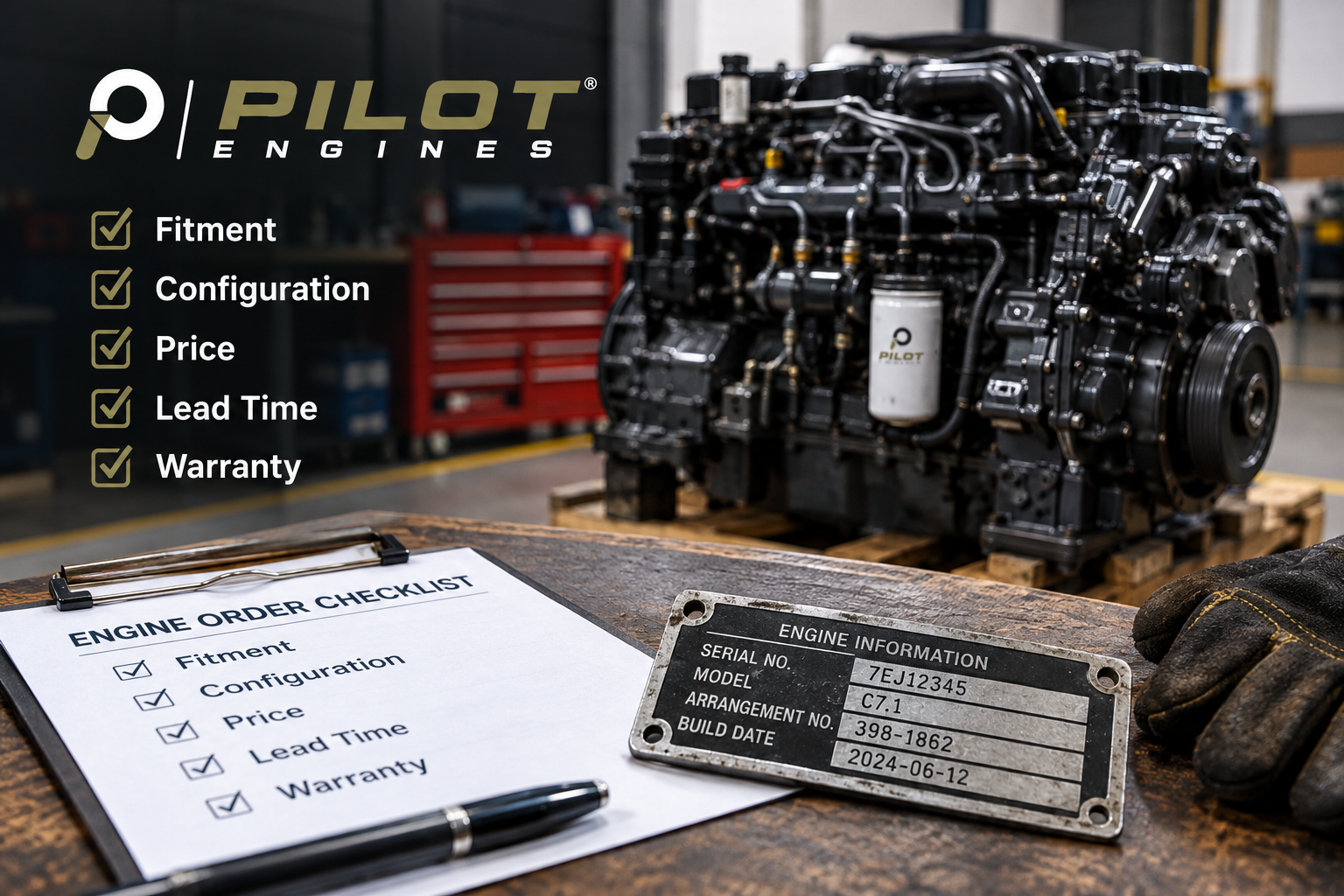
Repair shop checking engine serial number and replacement engine details before ordering
By 7011163434 • October 7, 2026
Before ordering a remanufactured engine, repair shops should verify fitment, configuration, pricing, lead time, warranty, and core requirements.
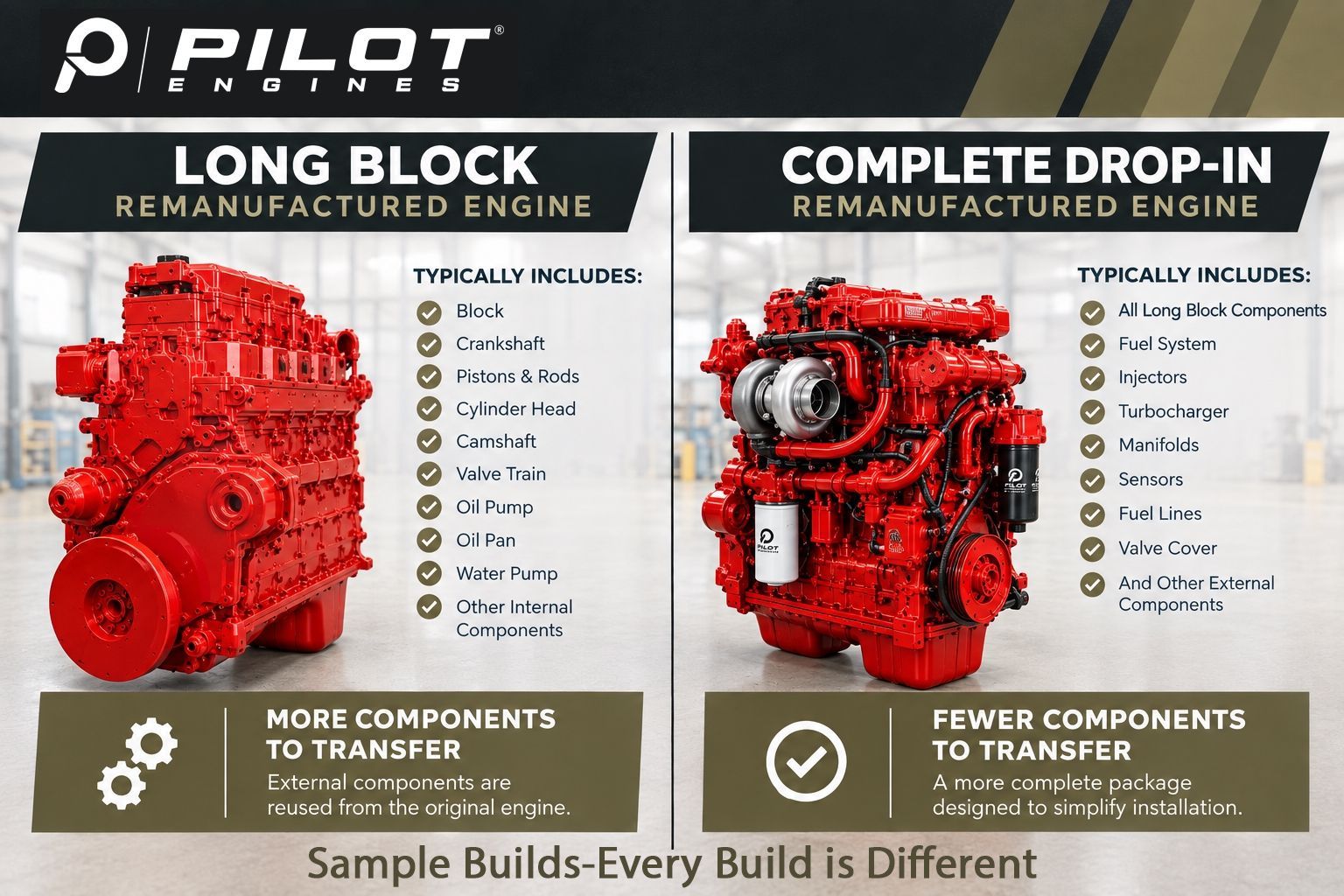
Long block and complete drop-in remanufactured engines compared for repair shops.
By 7011163434 • October 2, 2026
Learn the difference between long block and complete drop-in engines, including component transfer, installation, cost, and warranty considerations.
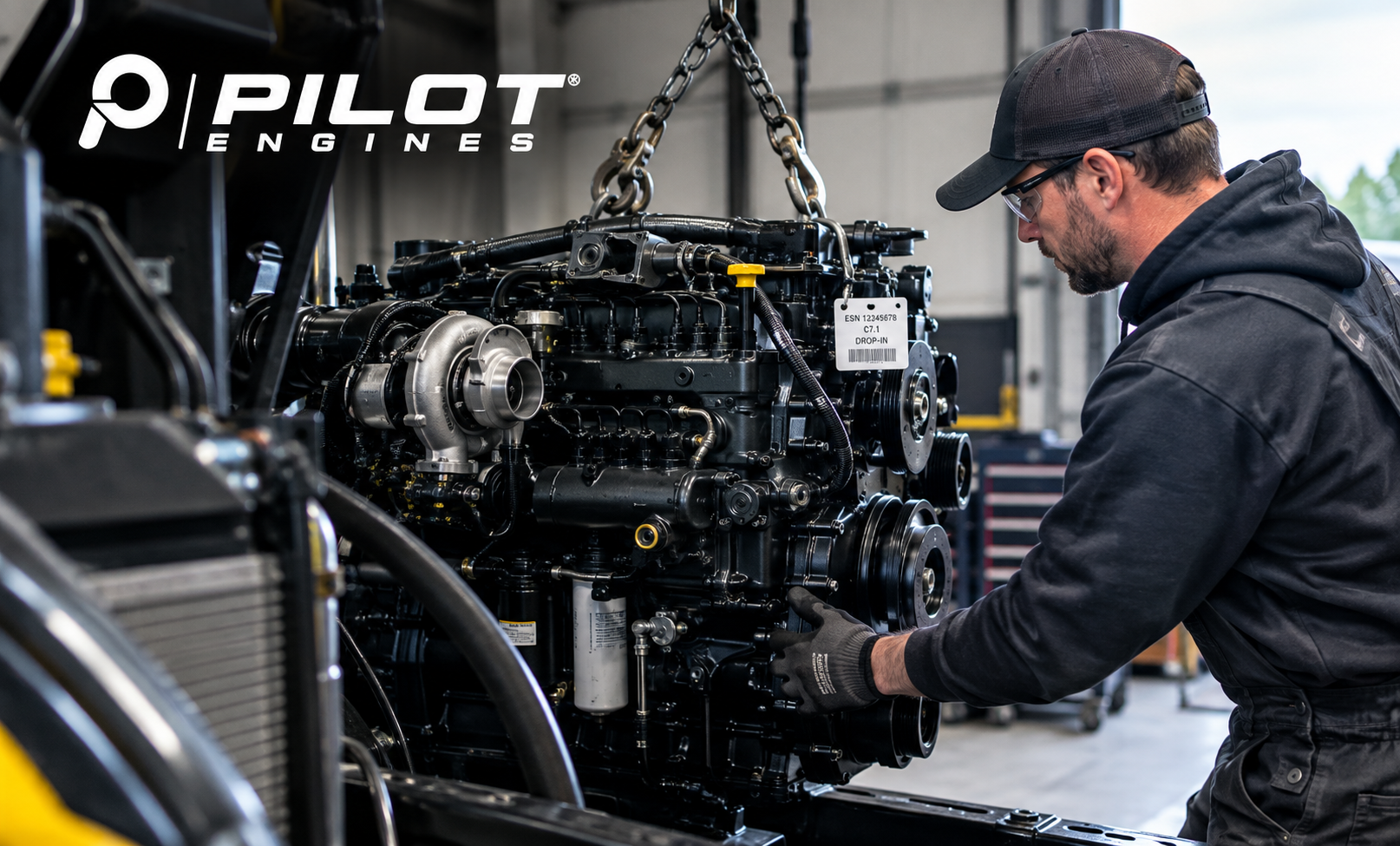
Equipment owner inspecting a remanufactured diesel engine before installation
By 7011163434 • September 29, 2026
Learn what to check before installing a reman engine, from fitment and component transfer to equipment inspection and warranty requirements
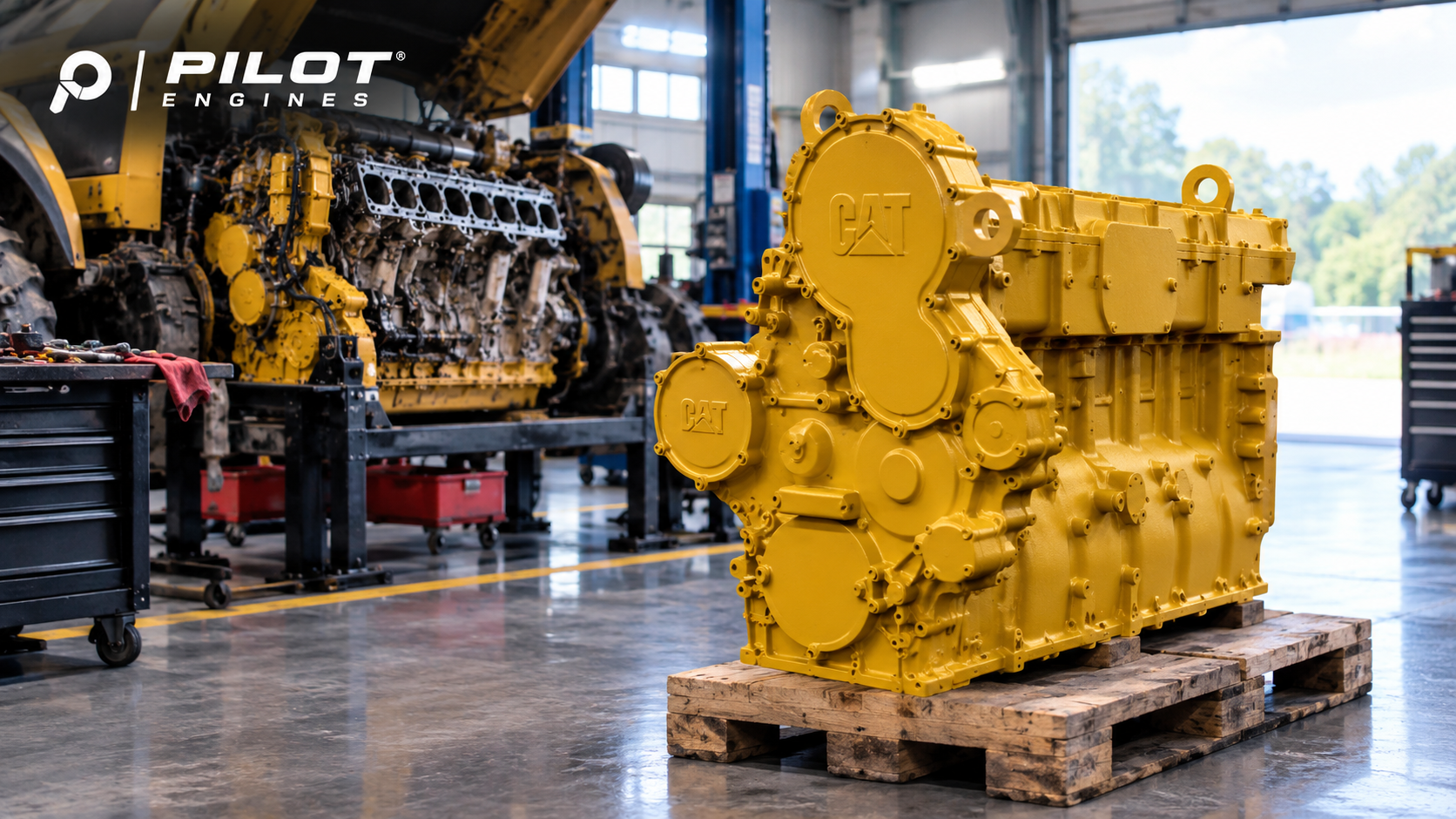
Yellow diesel engine in a repair shop comparing inframe rebuild and remanufactured engine options
By 7011163434 • September 23, 2026
Compare an inframe rebuild vs. a remanufactured engine and learn how damage, downtime, budget, fitment, and warranty can guide the right choice.
Remanufactured Engine
September 18, 2026
How long does a remanufactured diesel engine last? Discover the key factors affecting engine lifespan and how to get the most from your replacement.
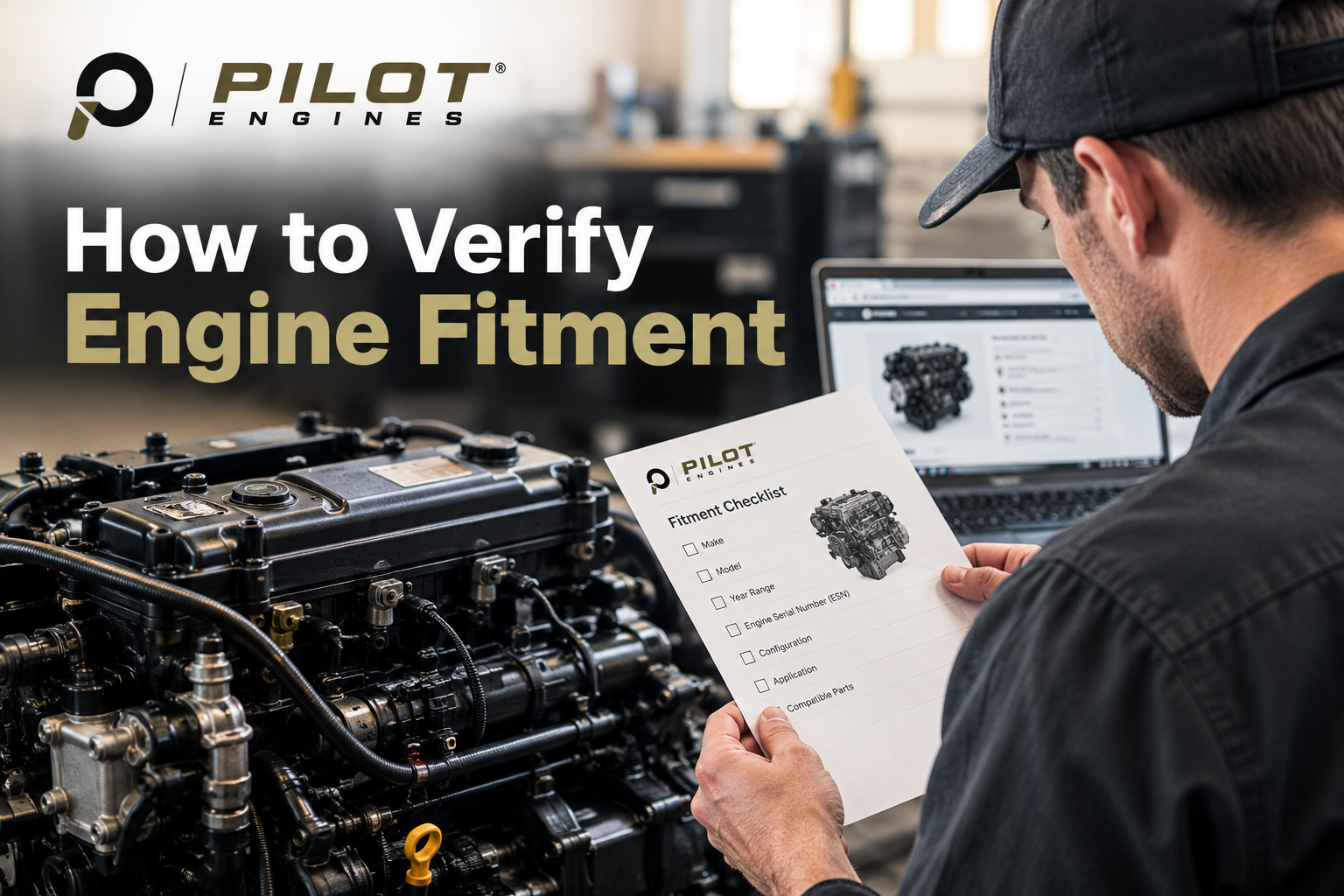
Technician looking at a checklist to confirm fitment.
By Bryan Schuldt • September 16, 2026
Learn what repair shops should verify before ordering a replacement engine, including the engine serial number, application, configuration, and fitment.
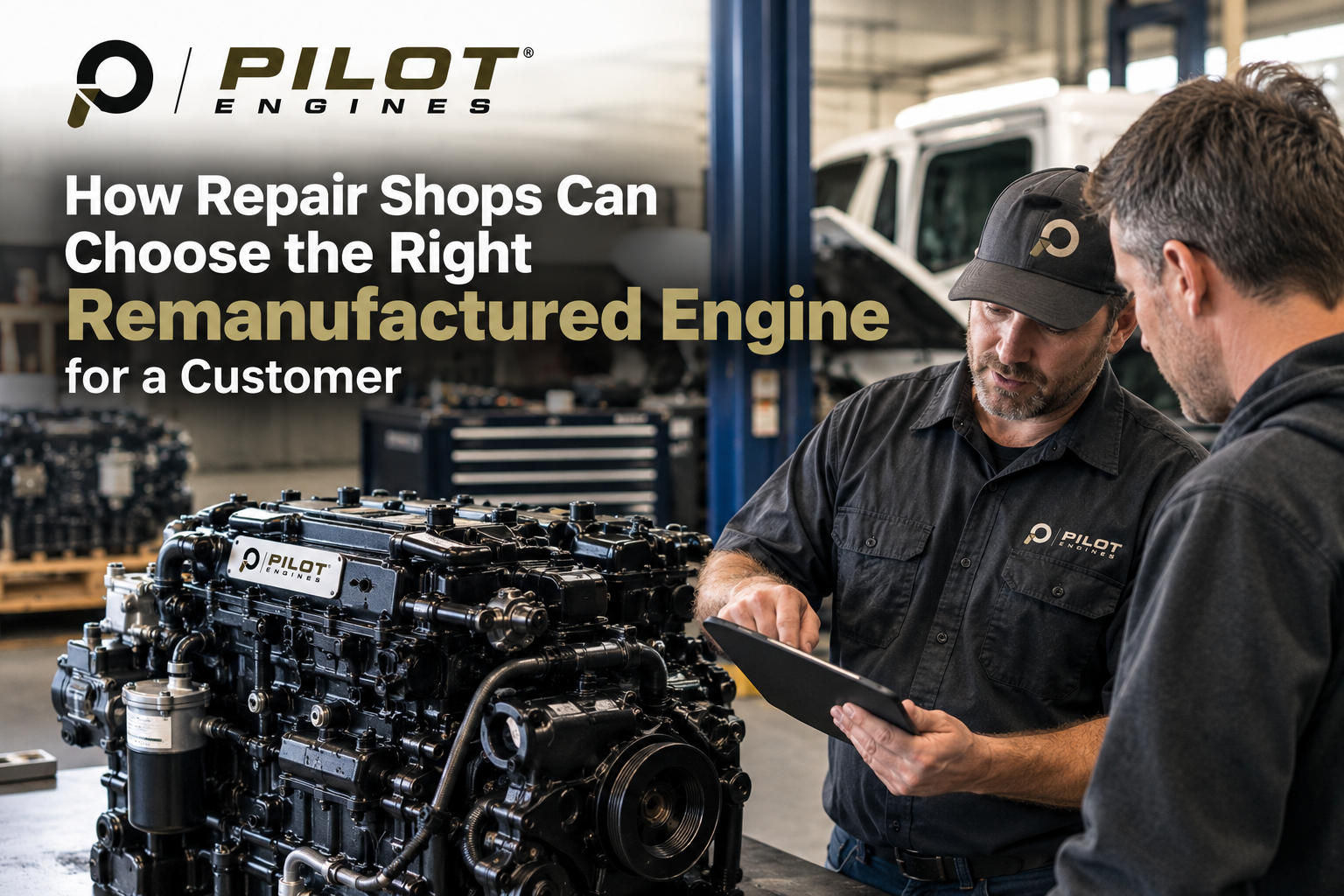
Technician talking to customer about choosing remanufactured engine
By Bryan Schuldt • September 10, 2026
Learn how repair shops can choose the right remanufactured engine by comparing fit, price, availability, warranty, freight, and supplier support.
Show More