How Repair Shops Can Choose the Right Remanufactured Engine for a Customer
For a repair shop or reseller, choosing a replacement engine is about more than finding the lowest price. You need the correct engine, a realistic delivery timeline, competitive pricing, and enough confidence in the product and warranty to stand behind your recommendation.
The best approach is to gather the right application information first, then compare engines based on fit, availability, price, quality, and warranty.
Start With the Exact Engine and Application
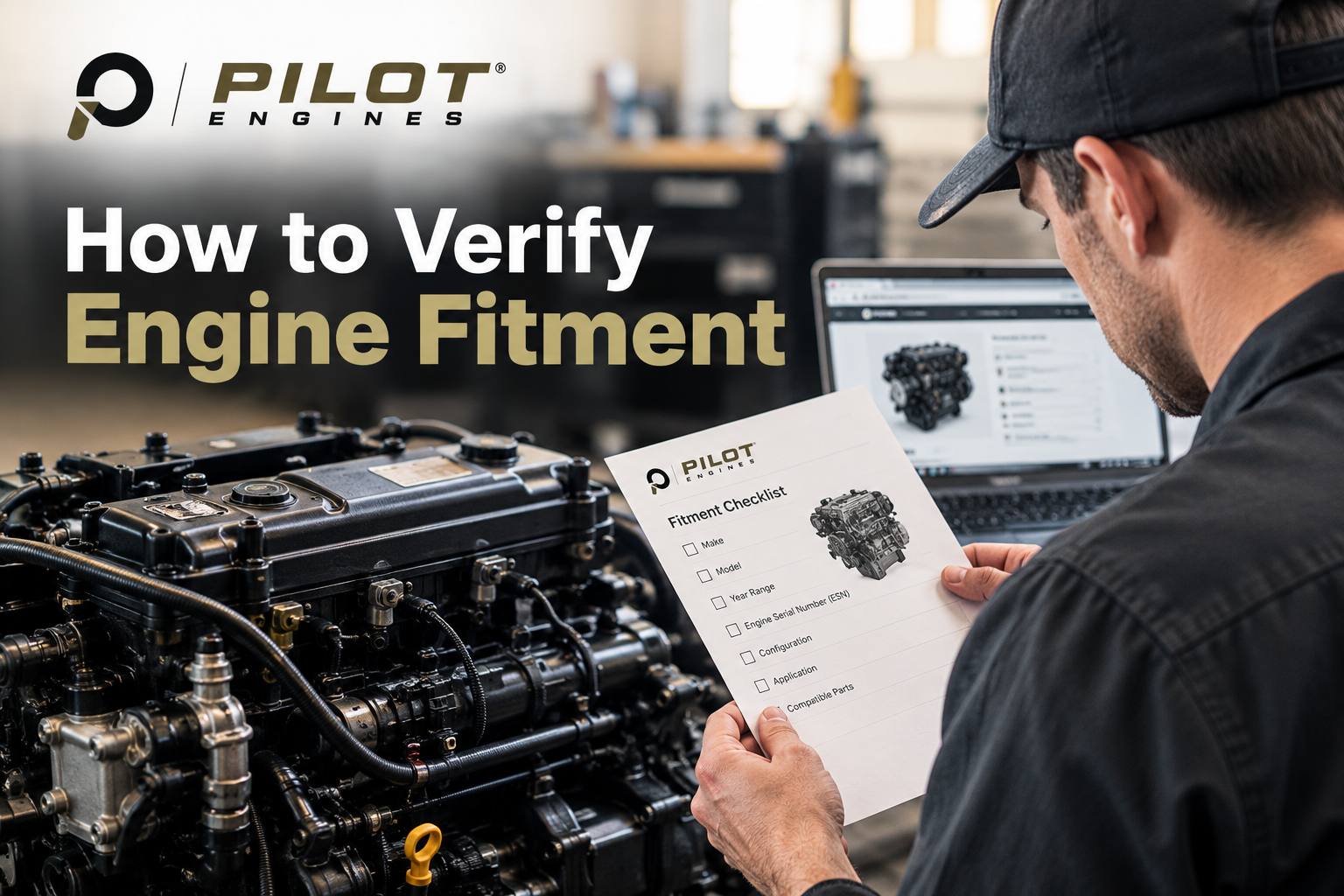
The first step is identifying exactly what the customer needs. A general engine model may not be enough because configurations can vary by application.
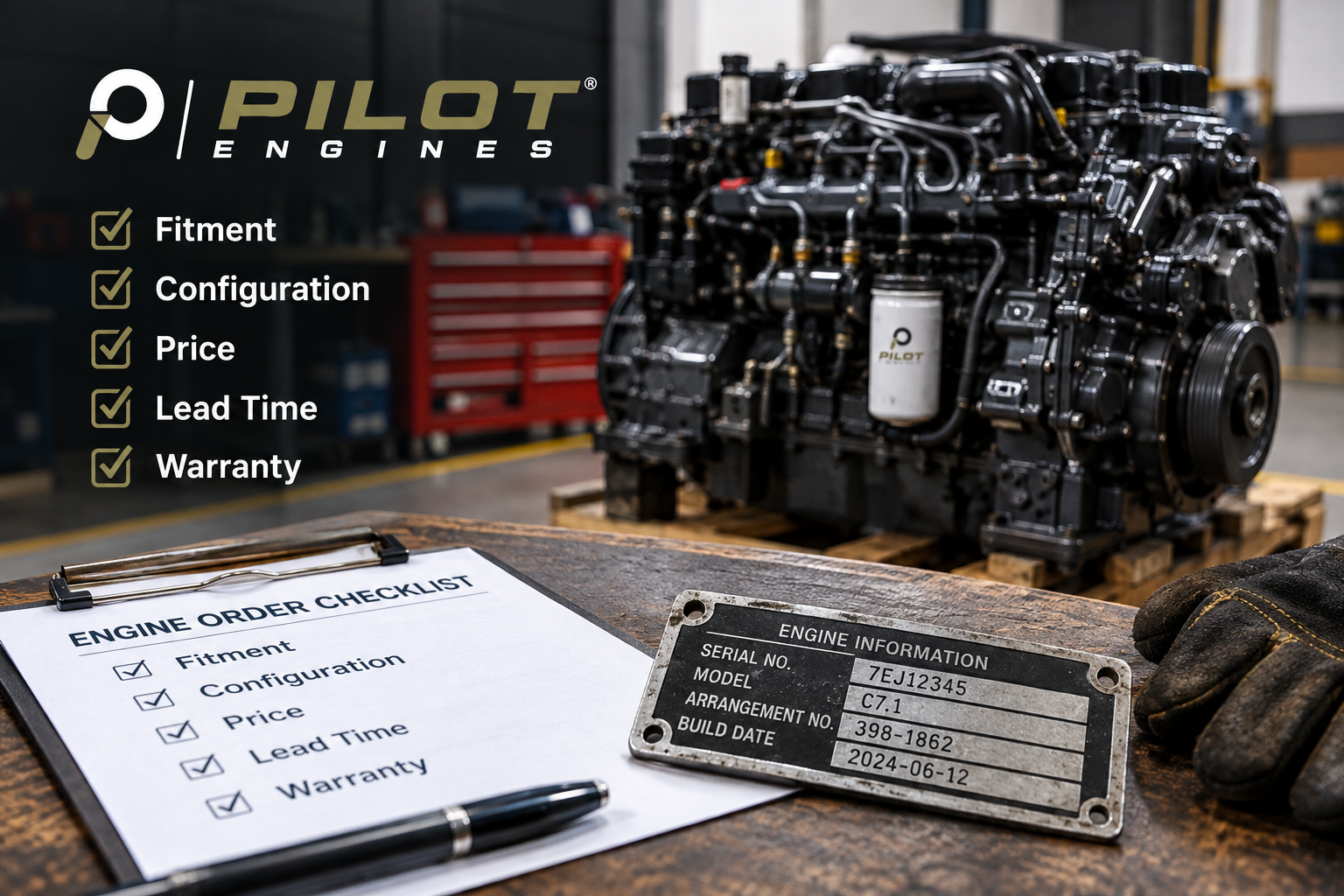
Pilot Engines builds engines to the customer's specific engine serial number and uses application information to match the correct engine. The company recommends providing information such as the VIN, engine serial number, and engine model when requesting a quote.
For a repair shop, collecting this information before calling can make the quoting process faster and reduce the risk of ordering the wrong configuration.
Before requesting a quote, gather:
- VIN, when applicable
- Engine serial number
- Engine model
- Vehicle or equipment make and model
- Application and intended use
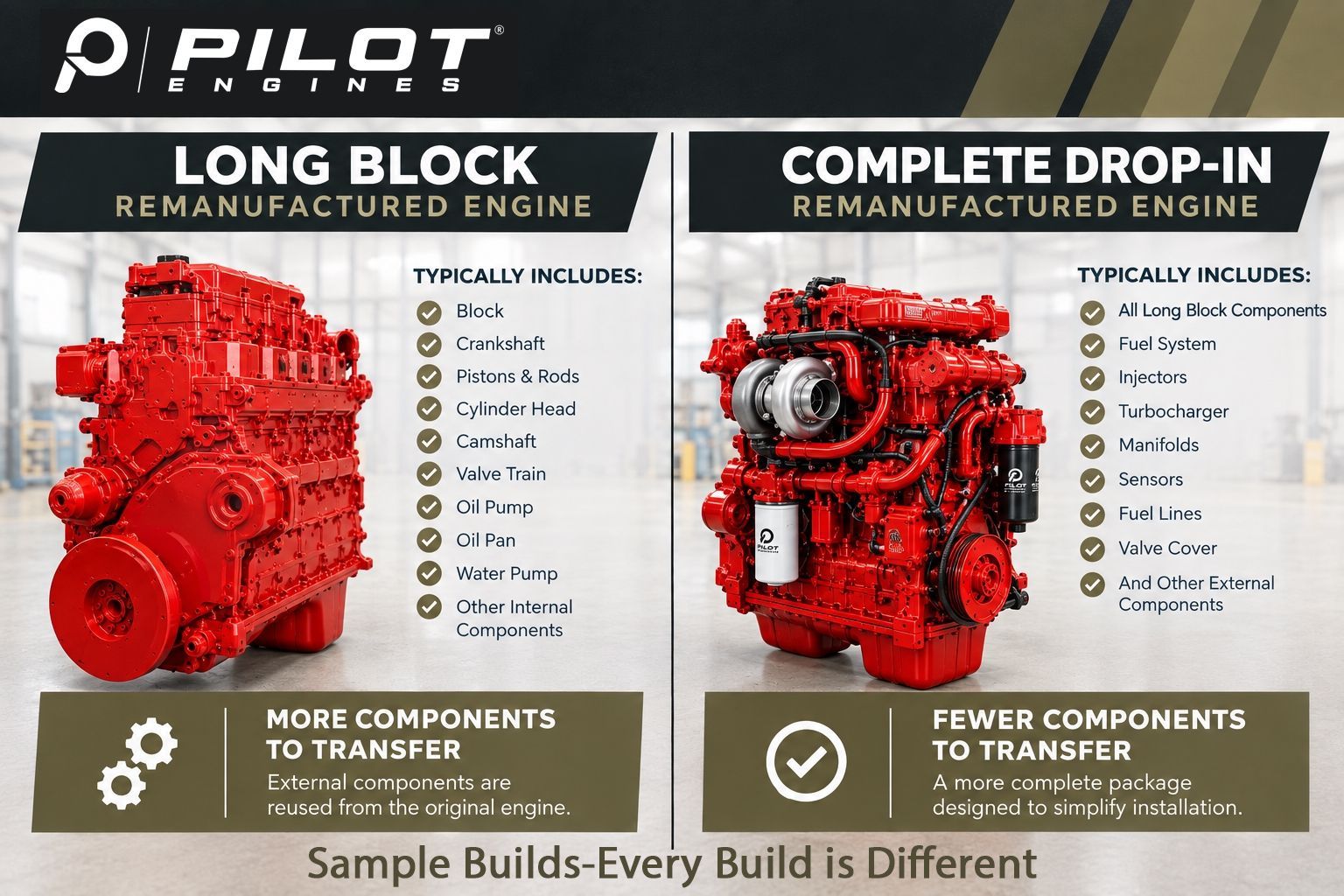
- Whether the customer needs a complete drop-in or long block
If you're unsure which configuration is appropriate, ask the supplier to help identify it rather than relying only on a general engine description.
Compare More Than the Engine Price
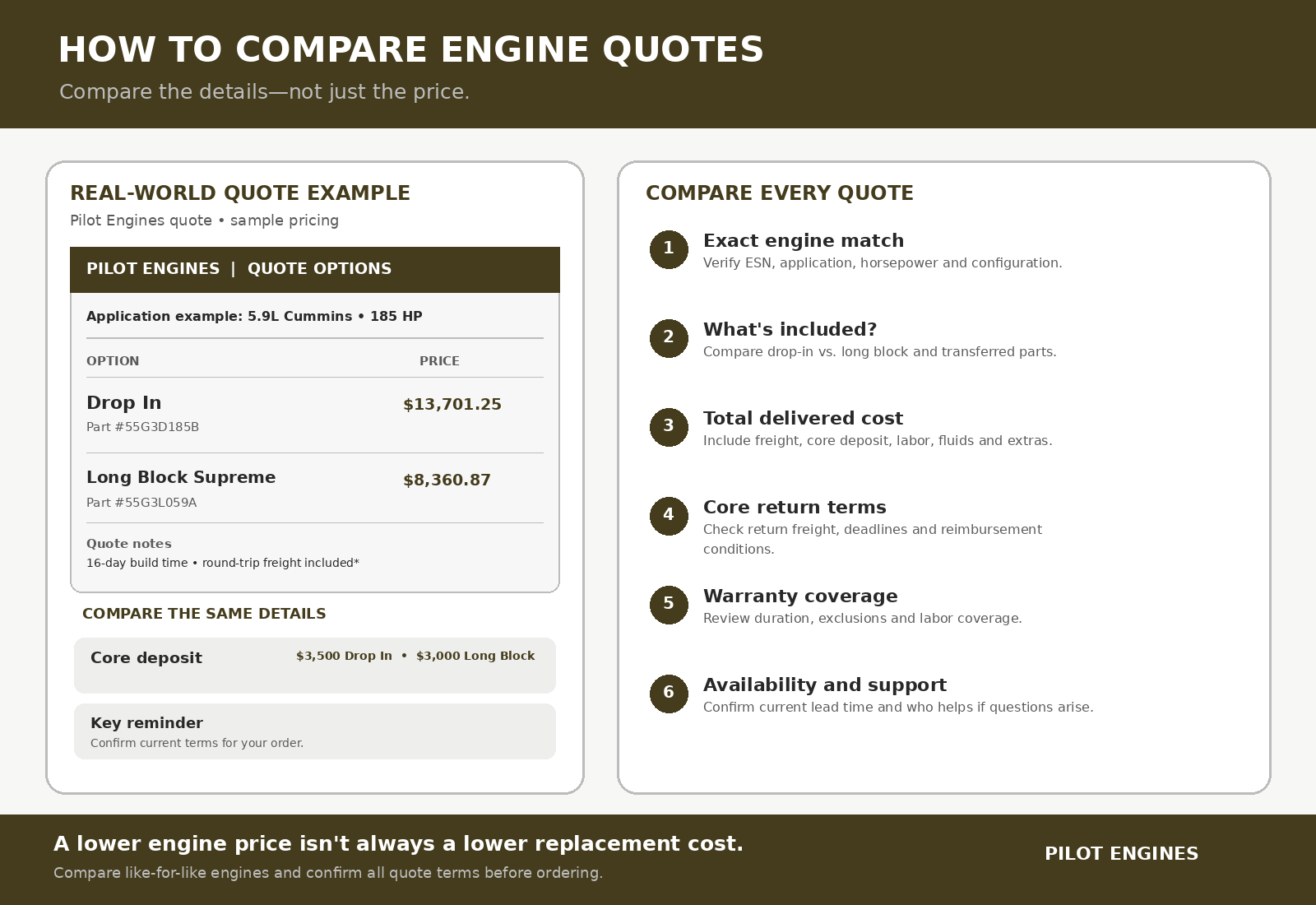
A lower quoted engine price does not necessarily mean a lower-cost repair.
When comparing suppliers, look at the complete purchase:
| Factor | What to Compare |
|---|---|
| Price | Total quoted engine cost |
| Availability | Whether the engine is in stock or requires production time |
| Freight | Whether shipping is included |
| Configuration | Whether the engine matches the application |
| Warranty | Coverage and registration requirements |
| Support | Help before and after the sale |
| Core | Return process and potential deductions |
Pilot Engines states that ground LTL and UPS freight within the continental U.S. is included with engine quotes. Its price-match policy also applies to like-for-like competitor quotes when the configuration and quality are comparable.
For a repair shop quoting an end customer, these details can make a significant difference to the final repair estimate.
How Important Is Lead Time?
Lead time can be just as important as price when a customer's truck or equipment is sitting in the shop.
Ask whether the engine is currently in stock and, if not, what the expected production time is. Pilot Engines says in-stock engines are ready to ship immediately, while other units typically require 7–10 business days depending on the model.
That makes availability an important question to ask
before presenting a final repair timeline to your customer.
If downtime is critical, don't simply quote an engine based on its advertised model. Confirm the specific configuration and current availability.
Understand the Warranty Before You Quote the Job
Warranty coverage matters to both the repair shop and the customer because the shop is often the one helping the customer navigate an issue if something goes wrong.
Pilot Engines' published warranty information varies by engine configuration and application. For example, its installation and warranty page lists two years/unlimited miles for on-highway diesel complete drop-in engines, with the second year covering the long block, one year/unlimited mileage for on-highway long blocks, and one year/2,000 hours for off-highway diesel complete drop-ins. Warranty registration is required.
Because coverage can vary, don't assume that one warranty applies to every engine. Confirm the specific warranty for the engine you're quoting and review the applicable requirements with your customer.
What Makes a Supplier Valuable to a Repair Shop?
Price and availability may get a supplier onto your quote sheet, but
responsiveness and support can determine who gets the order.
For a repair shop, a useful engine supplier should make it easier to:
- Identify the correct replacement
- Get a competitive quote
- Understand availability
- Arrange freight
- Handle the core return
- Address warranty questions
Pilot Engines provides support for engine identification and quotes, and its published process includes freight, delivery, and core-return support.
The company also says it works with installers when customers need help locating an installation facility.
That support matters because your reputation is on the line when you recommend an engine to your customer.
Before You Place the Order
Before ordering a remanufactured engine, confirm five things:
- Is this the exact application and configuration?
- What is the current lead time?
- What is the complete delivered price?
- What warranty applies to this specific engine?
- What information or documentation is needed to complete the order?
Having those answers lets you give your customer a more accurate estimate and reduces surprises during the repair.
For repair shops and resellers, the goal isn't simply to find an inexpensive replacement engine. It's to find a
properly matched engine from a supplier that can provide competitive pricing, dependable delivery, and support throughout the transaction.
If you need help identifying a replacement, have the customer's VIN, engine serial number, and engine model available when you contact Pilot Engines for a quote.
Frequently Asked Questions
What information does a repair shop need to order a replacement engine?
Have the VIN, engine serial number, engine model, and vehicle or equipment information available. These details help the supplier identify the appropriate configuration.
How should a repair shop compare remanufactured engine suppliers?
Compare the complete purchase—not just the engine price. Consider configuration, availability, freight, warranty coverage, core requirements, and supplier support.
How long does a remanufactured engine take to ship?
Pilot Engines states that in-stock engines are ready to ship immediately, while other units typically require 7–10 business days depending on the model.
What should a shop know about engine warranty coverage?
Warranty terms vary by engine type and application. Confirm the specific warranty before quoting the engine to your customer and make sure registration and other requirements are understood.