What to Check Before Buying a Used Engine
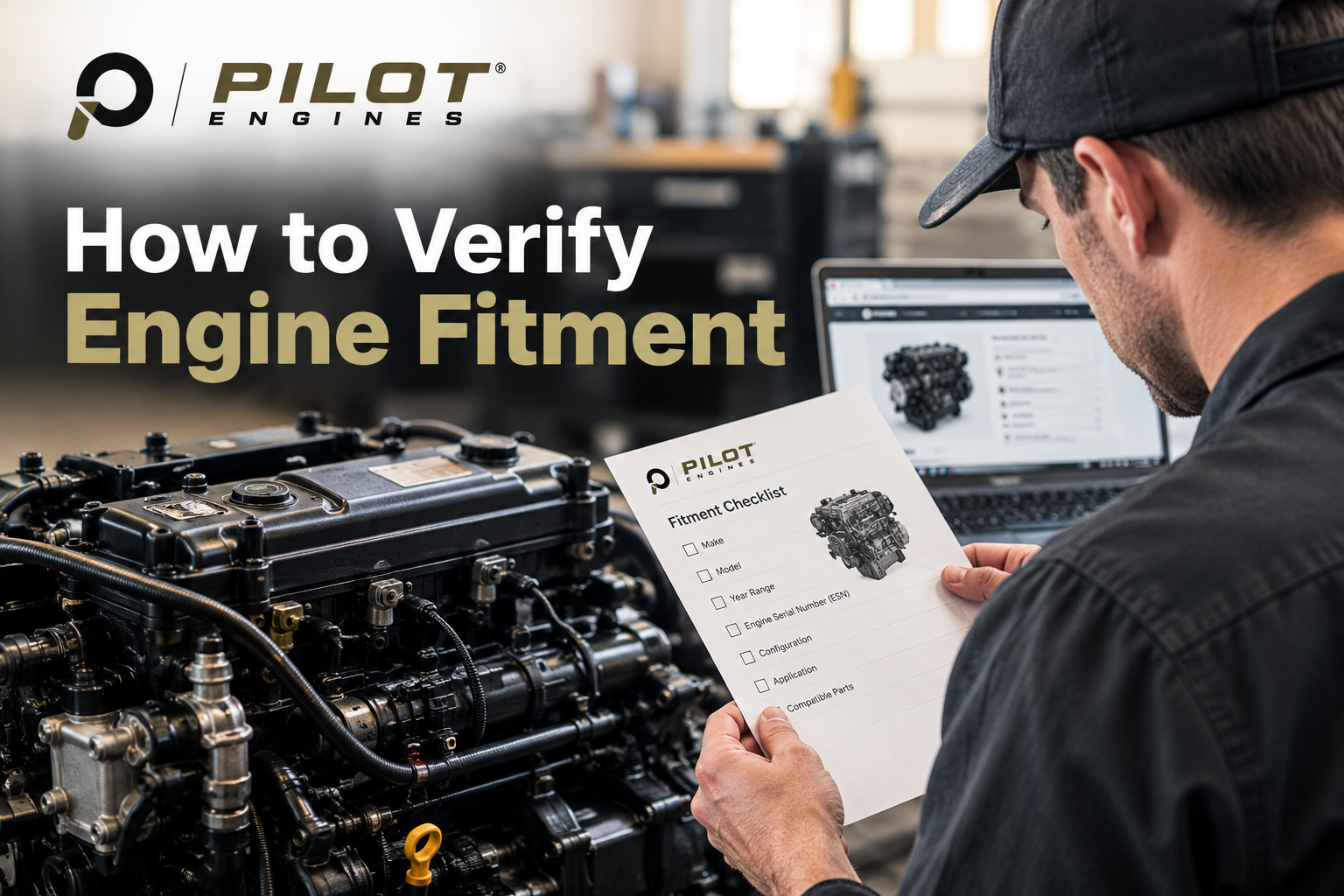
A used engine can look like an affordable solution when your truck or equipment needs a replacement. But before you buy, you need to know what you're getting, whether it will fit and what additional costs could come with it. A low purchase price doesn't tell you how much life remains in the engine or what it will cost to get your equipment running again. Use this checklist to make a more informed decision.
1. Verify the Engine Fits Your Equipment
Compatibility should be your first priority. An engine that looks identical to yours may have different specifications, components or emissions configurations.
Before purchasing, gather the following information:
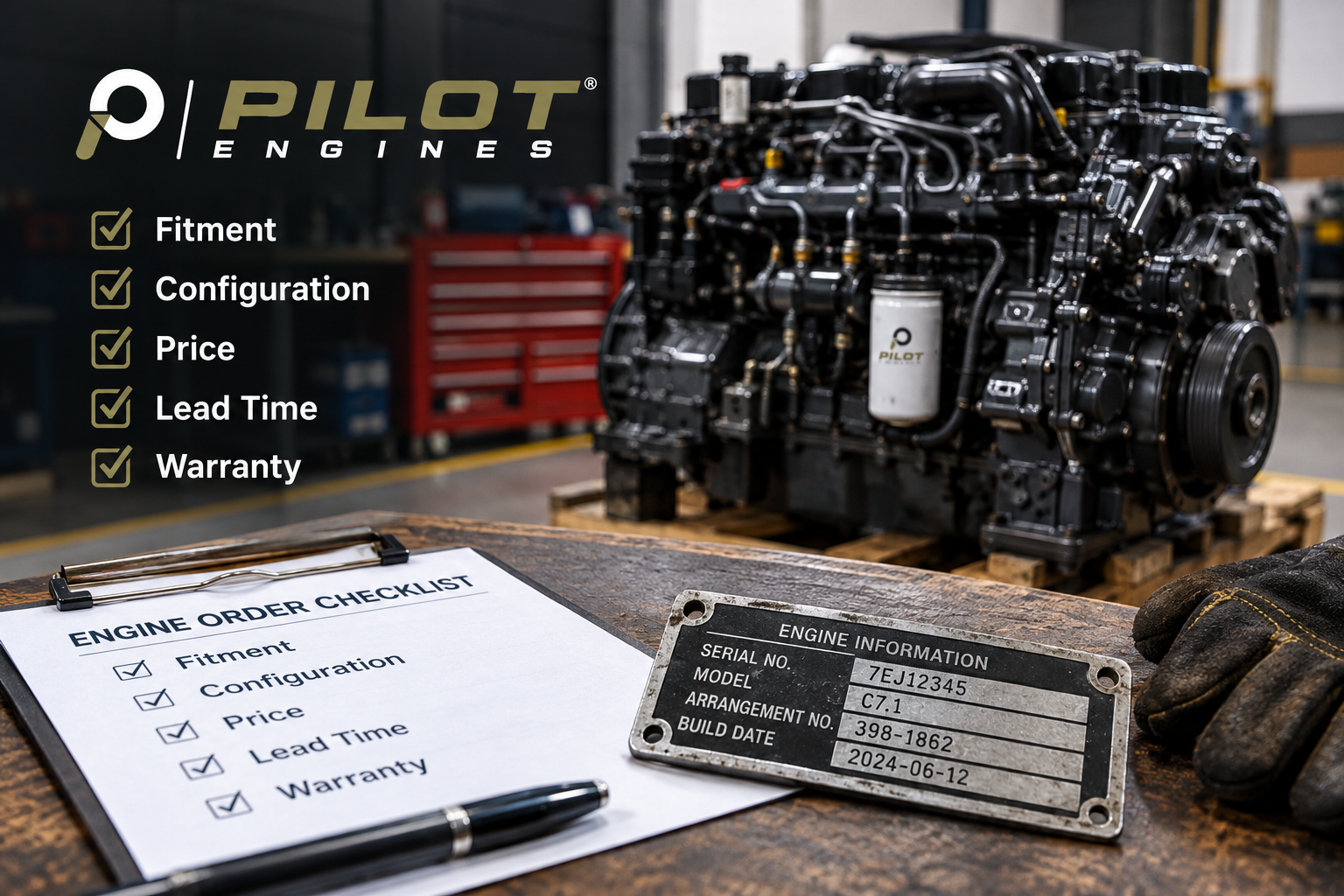
- Engine serial number: This helps identify the specific engine configuration.
- Equipment make and model: Include the year when applicable.
- Vehicle identification number (VIN): For trucks and road vehicles, the VIN can help confirm application details.
- Current engine model: Record the engine family and any identifying numbers available.
Ask the seller to confirm that the replacement matches your specific application. Don't rely on appearance, displacement or a model name alone.
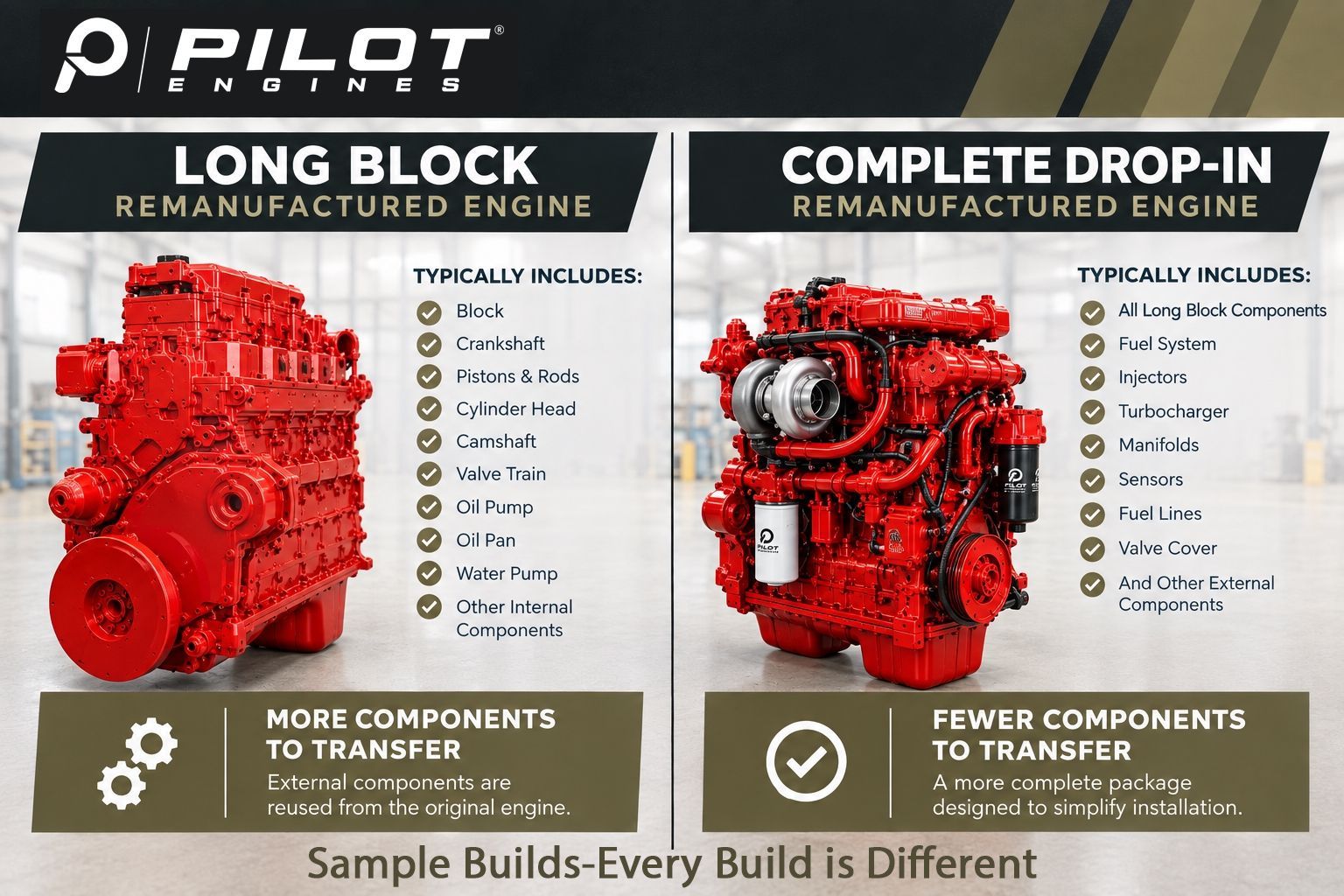
Also clarify what the engine includes. Some listings are for a long block, while others include more components in a complete engine assembly. The difference can affect installation labor, parts transfers and the final cost.
If you're unsure which engine you need, start with the Pilot Engines engine directory or contact the team with your engine serial number and application information..
2. Ask About the Engine's History
With a used engine, its previous life matters. An engine removed from a well-maintained vehicle may be a different proposition from one recovered after a major failure.
Ask the seller:
- What vehicle or equipment did the engine come from?
- Why was it removed?
- How many miles or operating hours did it have?
- Are maintenance records available?
- Has the engine been stored properly?
- Was it running when removed, and can the seller explain how that was verified?
Documentation is helpful, but answers alone don't prove the engine is in good condition. If the seller cannot provide a clear history, treat that uncertainty as part of the purchase decision.
Be particularly cautious if the engine came from a vehicle involved in a fire, flood or severe accident, or if it was removed because of an internal engine failure. Ask what is known about the event and whether the engine was inspected afterward.
3. Check the Engine's Condition
If possible, have a qualified mechanic inspect the engine before you buy it. A visual inspection can reveal warning signs, but it cannot establish the condition of every internal component.
Depending on the engine and whether it can be operated, ask about:
- Oil condition: Look for signs of contamination or unusual residue.
- Coolant condition: Check for evidence of oil contamination or corrosion.
- External damage: Inspect the block, mounting points, accessories and visible components for cracks, damage or missing parts.
- Signs of leakage: Look for oil, fuel or coolant leaks.
- Internal condition: Ask whether compression, leak-down or other appropriate tests can be performed.
Not every test is possible on an engine that has been removed or cannot run. A seller may provide test results, but confirm what was tested, when it was tested and what the results actually establish.
Remember that an engine can appear clean and still have internal wear. Fresh paint and a tidy exterior are not substitutes for evidence of condition.
4. Understand the Warranty and Return Terms
A used engine may come with limited coverage—or none at all. Before paying, get the seller's warranty and return terms in writing.
Find out:
- How long is the engine covered?
- Which parts or types of failure are covered?
- Does the warranty cover parts only, or does it include labor?
- What happens if the engine is incompatible with your equipment?
- Can you return the engine if it fails an inspection or arrives damaged?
- Are there deadlines or documentation requirements for making a claim?
Pay attention to exclusions. A warranty that covers the engine itself may not cover installation labor, towing, fluids or other related expenses.
Compare those terms with the coverage offered on a remanufactured engine. Pilot Engines publishes its engine warranty information, but coverage depends on the engine configuration and application. Review the terms for the specific engine you're considering rather than assuming all warranties are alike.
5. Calculate the Total Installed Cost
The purchase price is only one part of the expense. Before deciding, estimate what it will take to install the engine and return your equipment to service.
Include:
- The engine purchase price
- Shipping and handling
- Installation labor
- Additional parts, fluids and filters
- Components that must be transferred or replaced
- Diagnostic work or repairs identified during installation
Also consider the risk of additional expenses if the used engine arrives damaged, proves incompatible or fails after installation. You may not be able to predict these costs precisely, but you can ask your mechanic what risks are most relevant to your situation.
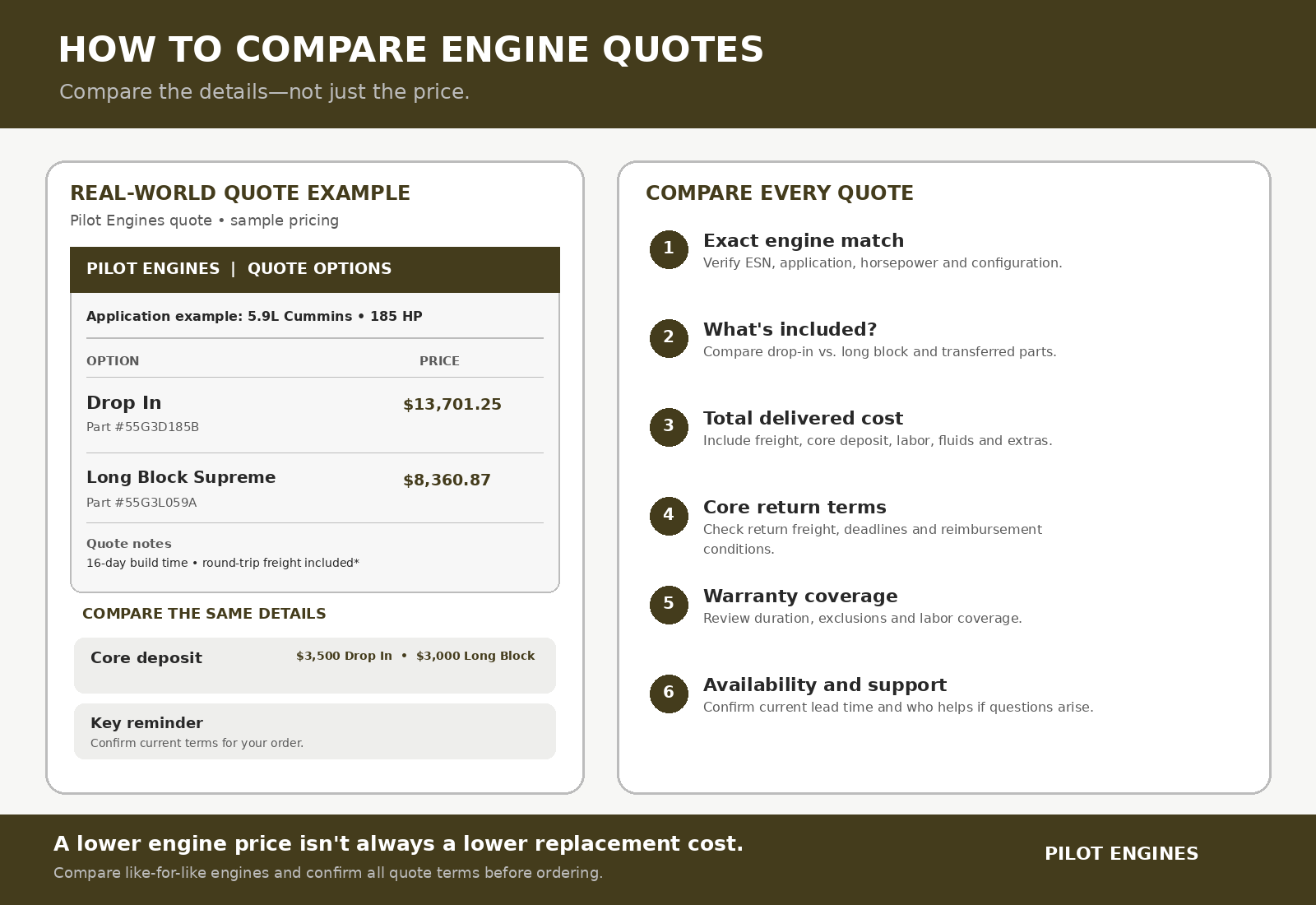
Then compare the total with a remanufactured engine quote. A remanufactured engine has undergone a defined disassembly, inspection and rebuilding process, rather than simply being sold with its previous service history. That doesn't eliminate every possible problem, but it gives you a different basis for evaluating condition and warranty support.
Pilot Engines explains the differences in its article on new, remanufactured and rebuilt engines.
Is a Used Engine the Right Choice?
A used engine may be a reasonable option when its history is documented, its condition has been assessed, the fitment is confirmed and the total cost makes sense. The risk increases when the engine's history is unknown, testing is limited or the seller cannot clearly explain the warranty and return terms.
Before committing, compare at least two things: the total installed cost and the confidence you have in the engine's condition and coverage. The cheapest engine isn't necessarily the least expensive repair if unexpected problems arise.
If you'd like to compare your options, Pilot Engines supplies remanufactured diesel and gas engines for trucks, heavy equipment and commercial applications. Have your engine serial number and equipment details ready so the team can help identify a suitable replacement and provide a quote.
Frequently Asked Questions
Can you tell if a used engine is good just by looking at it?
No. A visual inspection can reveal damage, leaks or other warning signs, but it cannot confirm the condition of every internal component. Ask for available maintenance and test records, and have a qualified mechanic perform appropriate inspections before buying.
Is a used engine cheaper than a remanufactured engine?
A used engine may have a lower upfront price, but the total cost depends on shipping, installation, additional parts, condition and warranty coverage. Compare complete quotes rather than purchase prices alone.
What information do I need to find the correct replacement engine?
Start with the engine serial number, engine model and equipment make and model. For a truck or road vehicle, have the VIN available as well. These details help a supplier verify the correct configuration for your application.
Ready to Find the Right Remanufactured Engine?
Pilot Engines makes it easy to find the right Reviva remanufactured engine for your application. From long blocks to complete drop-in engines, our team can help match you with the right engine for your vehicle or equipment.